Jensen Huang’s product presentations explain what new computing systems can do. The financial question is different: will customers earn enough from those systems to keep investing? To read the AI infrastructure cycle, connect the equipment supplier’s revenue with the customer’s spending and eventual usage. This article offers a framework rather than a prediction for NVIDIA’s next quarter.

.jpg)
One company’s revenue is another company’s investment
A sale of computing equipment can be revenue for the supplier and capital spending for its buyer. The buyer may recognize the cost gradually through depreciation while paying cash earlier. Consequently, strong supplier sales and heavy customer cash outflows can appear at the same time without contradicting one another.
Imagine a cloud provider spends a hypothetical $1 billion on systems expected to support several years of service. If those assets were depreciated evenly over five years with no residual value, the simple annual depreciation charge would be $200 million. That accounting expense is not the same as the first-year cash payment. Actual useful lives, components and accounting policies vary, so treat the example as a timing illustration.
Capacity is not utilization
Installed capacity describes what the equipment could support. Utilization describes how much it is actually used, and paid utilization asks whether that use produces customer revenue. A server can be technically busy without every hour generating an attractive economic return. Internal experimentation and customer-facing production workloads do not necessarily have the same profitability.
Training involves building or updating models, while inference involves using a trained model to produce outputs. Demand can move between those activities as applications develop. An infrastructure story should therefore describe the workload and who pays for it rather than assuming every additional model query translates into the same revenue or margin.

Look beyond the most visible chip
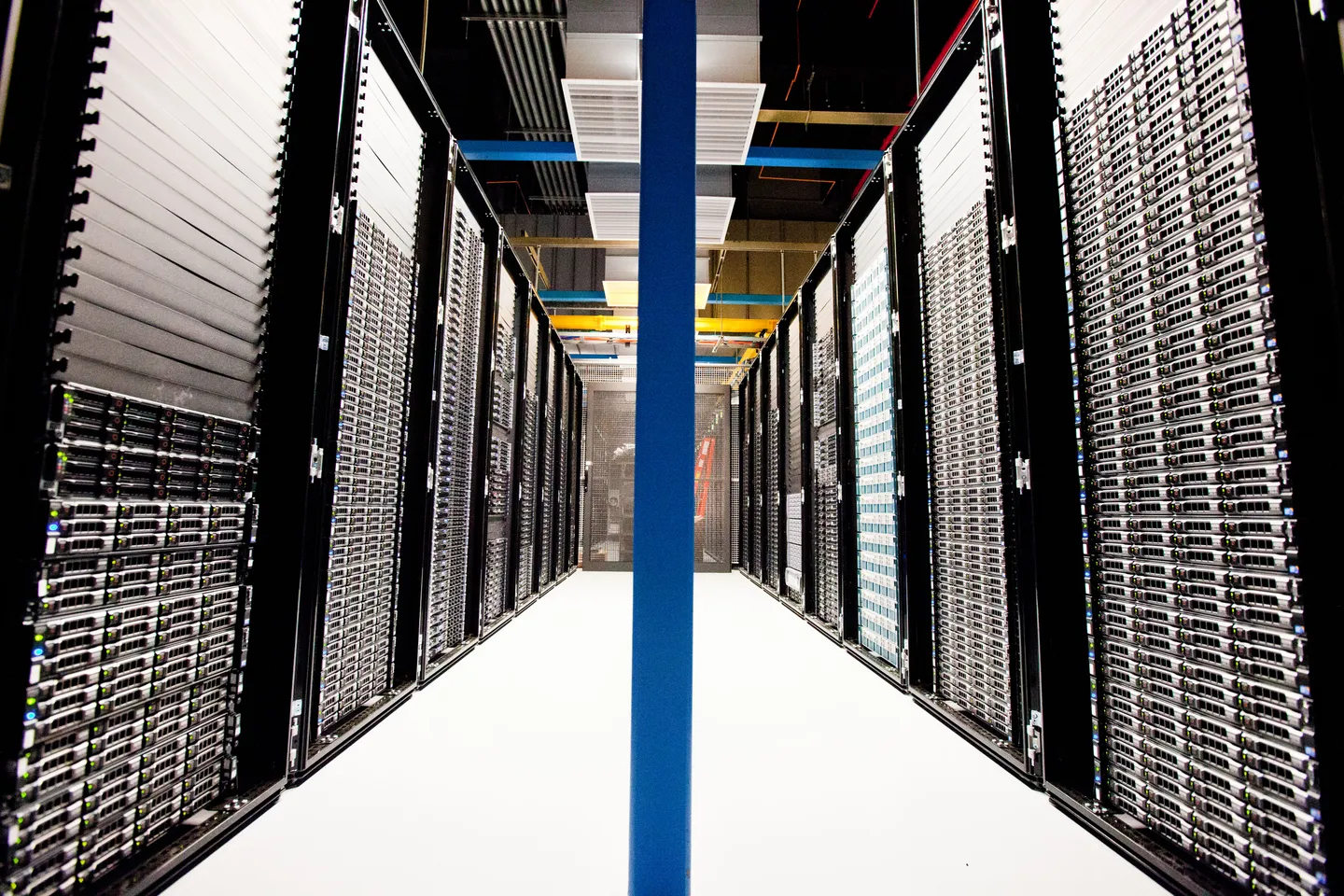
A useful computing system also needs memory, networking, power, cooling and a place to operate. If one component is constrained, buying more of another may not immediately produce more usable capacity. This is a bottleneck problem: the slowest necessary part can limit the output of the whole installation.
Read supplier reports for product transitions, customer concentration, commitments and inventory, then compare them with customer disclosures about spending and service demand. A customer can plan more investment while facing delays that push actual deployment into another reporting period. Do not turn an intention, a purchase commitment and recognized revenue into three separate pieces of incremental demand.
Build a testable thesis, not an endless growth line
Start with a statement that could prove wrong: for example, additional infrastructure will be supported by a broader set of paying applications. Then identify evidence that would weaken it, such as rising idle capacity or customers repeatedly extending deployment schedules. These are research questions, not claims about current conditions.
A useful quarterly checklist pairs supplier revenue and margin with customer capital spending, capacity deployment and monetization disclosures. Valuation belongs at the end of that process. Even if a market grows, a stock can disappoint if its price already assumes faster or more profitable growth. Conversely, a slower percentage growth rate does not by itself show that absolute demand is falling. Separate the level, the rate of change and the expectations embedded in the price.
The question I would return to is whether the buyer earns enough from the new capacity to keep ordering. A supplier can enjoy strong demand while its customers are still working out which uses justify the expense; those are connected stories with different clocks.
The next question for AI spending
Track equipment sales, deployed capacity and customer returns separately. They measure different stages of the AI investment cycle.
Does more AI capital spending guarantee higher shareholder returns?
No. Returns also depend on utilization, pricing, operating costs, asset life and the price investors paid for the business.
Sources & further reading
Source material reviewed Sep 6, 2026. These links support the factual background. Worked examples and editorial interpretations are identified in the text.
Join the conversation
What would you add, question or explain differently? Please discuss the idea and respect the person.
Comments are screened for spam and abuse. Some are held for review. We store your comment and a daily security identifier; see privacy. Keep personal contact details out of your comment.