A beautiful space image often reaches us before its explanation does. We notice the color, the shape and the feeling of scale, then share it with a caption that may have lost the name of the instrument. I think the missing information makes the image less interesting. Understanding how it was made adds something: a way to see the scientific question inside the picture.


An instrument does not see exactly as we do
NASA explains that the James Webb Space Telescope observes infrared wavelengths and that its full-color images translate selected measurements into colors people can see. The assignment has a method: within the combinations described by NASA, shorter wavelengths are generally represented toward blue and longer wavelengths toward red. The result is a visible presentation of measurements outside ordinary human vision.
That does not make the image meaningless or equivalent to an invented illustration. A weather map also uses visible colors to communicate a measurement. The useful question is what the colors encode. A red region in one image should not automatically be interpreted using the color meaning from another instrument or a different presentation.
Start with the caption before the conclusion
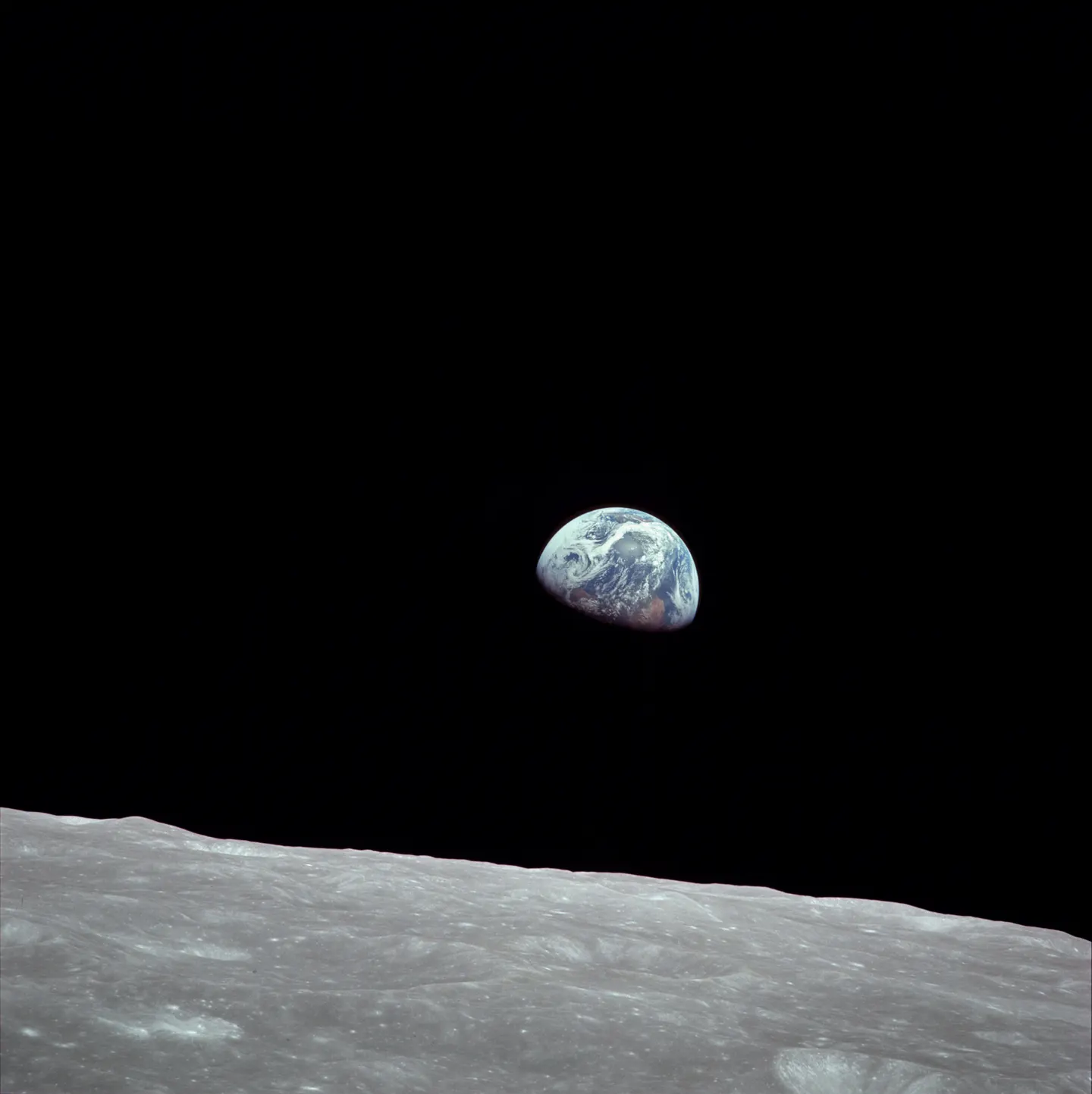
For any widely shared image, look for the target, observing instrument, filters or wavelengths, and processing credit. Those details establish what was measured and what the presentation is intended to reveal. The image used to accompany this essay is the archival Apollo 8 Earthrise photograph, identified in its caption. It is a historical example of space imagery, not a Webb observation or evidence for a new discovery.
This distinction may sound fussy until two unrelated images circulate under the same headline. A date can refer to an observation, a public release or a later reprocessing. Keeping those events separate prevents an old image from becoming an accidental claim about something that happened this week.
A photograph and a scientific claim do different work
Imagine two presentations of the same set of measurements. One emphasizes structure in a bright region; another makes a faint feature easier to notice. A casual viewer might conclude that the object changed dramatically. The more useful first question is whether the processing and color assignments changed. This is a reading exercise, not an allegation about any particular published image.
A claim about the age, distance or composition of an object also involves analysis beyond visual resemblance. If an image is said to overturn an established theory, I would look for the research paper, the authors’ stated uncertainty and what observation would distinguish their interpretation from alternatives. The striking appearance of a picture cannot supply those missing steps.
Leave room for wonder and uncertainty
There is no need to choose between enjoying a space image and asking technical questions about it. In my view, knowing that a color represents a particular measurement makes the scene more remarkable. The picture is a carefully built bridge between an instrument’s data and a human viewer’s ability to notice patterns.
Before sharing the next image, keep the original source link with it and describe the instrument correctly. If the paper offers a possible explanation, preserve that uncertainty in the caption you write. A short, accurate sentence travels better over time than a dramatic claim that needs to be corrected after everyone has already seen it.
Wonder, with the caption still attached
Read the instrument, wavelength and processing notes. Assigned color can communicate real measurements without matching naked-eye vision.
Use Image print size calculator: pixels to inches and cm ↗
Are the colors in a Webb image what a person would see from a spacecraft?
Not generally. Infrared measurements are assigned visible colors to communicate features people cannot directly see at those wavelengths.
Sources & further reading
Source material reviewed Sep 6, 2026. These links support the factual background. Worked examples and editorial interpretations are identified in the text.
Join the conversation
What would you add, question or explain differently? Please discuss the idea and respect the person.
Comments are screened for spam and abuse. Some are held for review. We store your comment and a daily security identifier; see privacy. Keep personal contact details out of your comment.