A budget limit sounds like a clean way to compare Formula 1 teams: put a ceiling on spending and see who uses the money best. The headline becomes less simple when the rules change which costs sit beneath that ceiling. Understanding that boundary makes the sport’s financial story more interesting than a quick comparison of two annual numbers.

The 2026 figure and the comparison problem
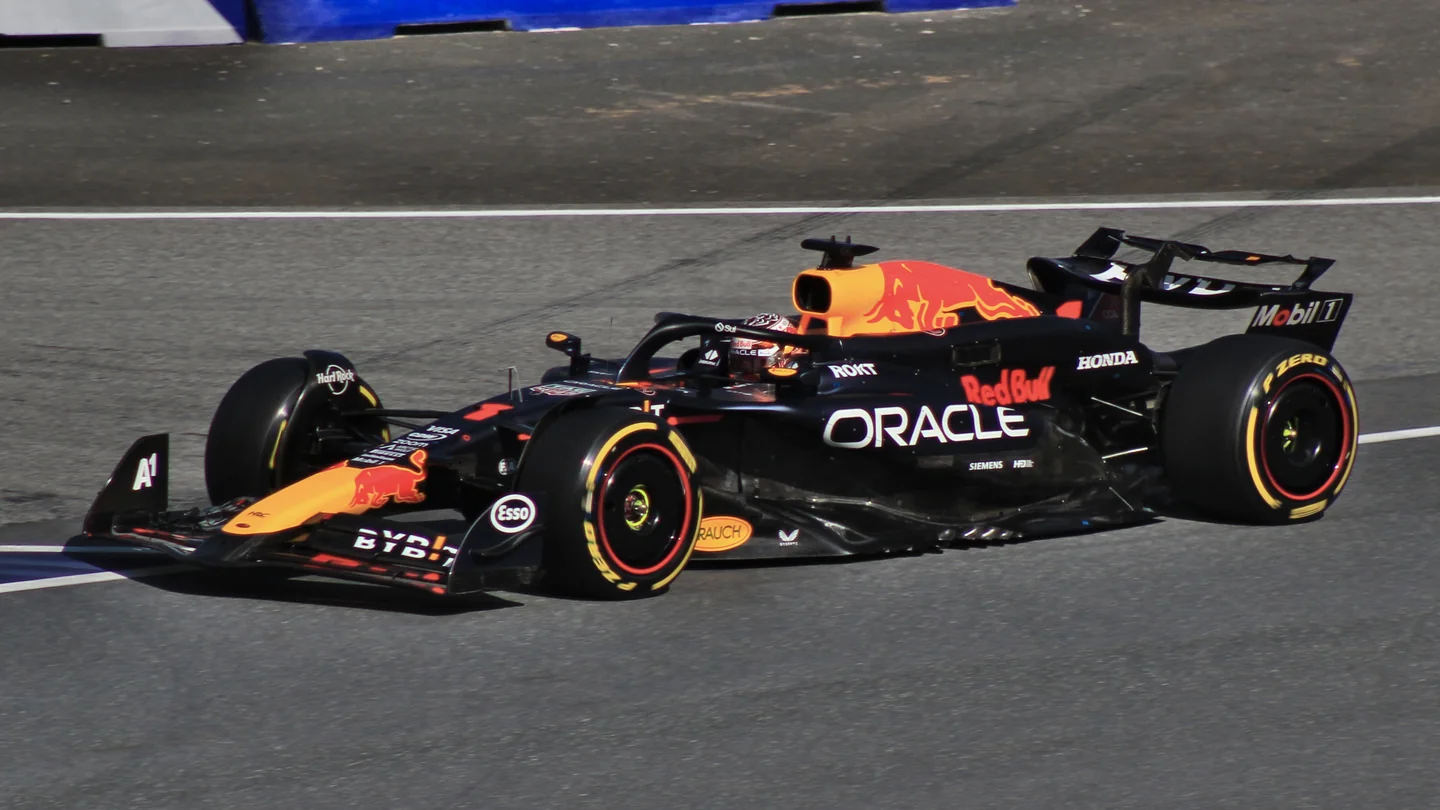
Formula 1’s explanation published on April 10, 2026 describes a team cost cap of $215 million, compared with a $135 million base plus inflation in 2025. It also explains that the change brings additional costs inside the limit, including annual depreciation in place of a separate capital-expenditure arrangement. The larger headline is therefore not an equivalent amount of extra discretionary spending.
That is the current-season background to this explainer, not a claim that the rule was announced today. Detailed application depends on the financial regulations and the relevant circumstances. A reader comparing seasons should first ask whether the two numbers cover the same kinds of expenditure.
An accounting boundary changes the apparent increase
Consider a simplified, fictional workshop. Its old internal budget includes $100 of running costs, while $20 of equipment-related cost is tracked separately. A new reporting system puts both inside a $120 limit. The printed ceiling has risen by twenty percent, yet the underlying allowance in this example has not expanded.
The example is not a calculation of any F1 team’s position. It isolates a common accounting issue: reclassifying a cost can change a reported total without changing the resources available. The same question is useful when reading a company’s revised expense categories or comparing government spending measures.
Depreciation is the allocation of an asset’s cost across accounting periods as it is used. It differs from the cash payment made when equipment is purchased. Once a rule changes which of those measures is counted, comparing only the annual cash number can leave out part of the story.
Every development choice has an alternative
Opportunity cost is the value of the best alternative forgone when a resource is committed. In a hypothetical racing programme, developing one component may use budget, engineering attention and manufacturing capacity that could have supported another. Even if both ideas are promising, they cannot always receive the same priority.
This is where a spending limit can deepen the sporting contest. A team must choose which uncertainty is worth investigating and when to stop pursuing an idea. A potential improvement that arrives too late in a season may have less practical value than a smaller change available earlier. That is an analytical framework, not inside information about any team’s plans.
The uncertain part matters. An estimate made before testing is different from an improvement demonstrated on track. Looking back at a failed development decision with the result already known can make the original choice seem easier than it was.
Equal limits do not imply identical starting points
A spending rule constrains defined activity; it does not make every organization identical. Knowledge, existing processes and the ability to learn from a test are different from the amount on an annual budget line. For spectators, that distinction leaves room to appreciate execution without assuming that spending alone explains every result.
Watch the decisions as well as the stopwatch
When a team discusses an upgrade, listen for what it is intended to improve, when it will be available and what evidence would show that it worked. Keep the performance claim separate from the financial explanation. A budget headline cannot tell us all of those things.
My view is that the cost cap is most useful to readers as a way into the choices behind a season. The sport is still measured in time, but some of its most consequential decisions happen while people are deciding where to spend their next unit of effort.
My view: watch the trade-offs
Compare what each season’s limit includes before comparing its size, then look at how teams allocate scarce development resources.
Does the higher 2026 F1 cost cap mean teams simply received $80 million more to spend?
The headline difference does not measure like-for-like additional spending. Formula 1 explains that the accounting scope changed, so the included costs and adjustments must be compared as well.
Sources & further reading
Source material reviewed Sep 6, 2026. These links support the factual background. Worked examples and editorial interpretations are identified in the text.
Join the conversation
What would you add, question or explain differently? Please discuss the idea and respect the person.
Comments are screened for spam and abuse. Some are held for review. We store your comment and a daily security identifier; see privacy. Keep personal contact details out of your comment.